


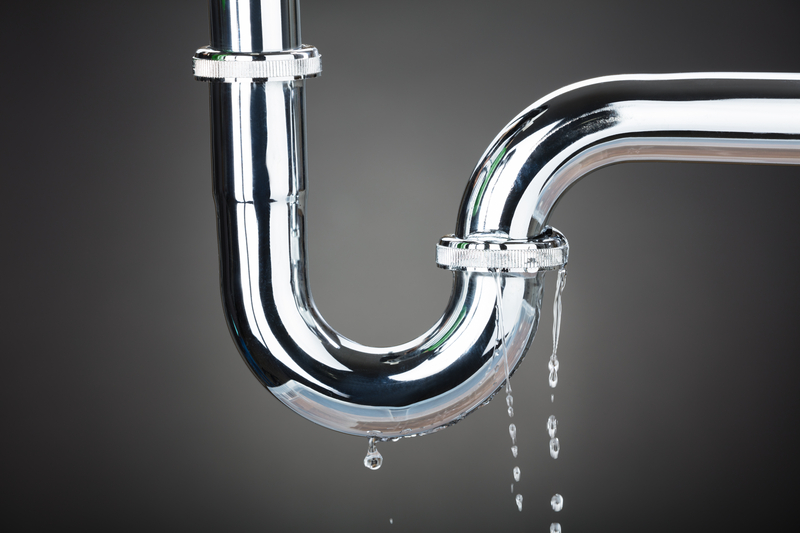
Now that warm-weather travel is picking up, you might be leaving your home unattended for days or weeks at a time. Unfortunately, this could lead to leaking and water damage that can quickly become extensive and costly to repair.
“Most homeowners think a small leak is a small problem. However, even a pinhole leak running nonstop for days means hundreds or thousands of gallons of water and saturated drywall, flooring, and other structural materials,” explains Kelly Russum, the owner of KC’s 23 1/2 Hour Plumbing & Air Conditioning in Palm Springs, CA.
Before you leave for your trip, it’s important to be proactive and take preventive measures to protect your home, sanity, and finances while you’re away.
What causes leaks when homes are empty?
Leaks aren’t typically the result of a sudden, dramatic event.
They start at the weakest points in the systems that people don’t think about on a daily basis—supply lines behind toilets and sinks, connections to appliances like washing machines and dishwashers, and aging fittings that have been under constant pressure for years. “What we see over and over again is that it’s not usually the pipe that bursts. It’s the small component that gives out,” says Paul Vacquier, CEO of Beagle Services in Los Angeles.
When a home is empty, that small failure has time to run. And, if the water pressure is elevated, it can accelerate wear on those components and increase the likelihood of something failing while nobody’s there to catch it.
Assumptions to avoid before going out of town
Most homeowners assume that if something goes wrong, they’ll either find out about it quickly or it won’t be a big deal.
“There’s a general belief that homes are “tight” and that plumbing issues are rare events. That, however, couldn’t be further from the truth,” explains Vacquier.
A large share of water losses come from slow, continuous leaks that go undetected. There’s nothing in a typical home that automatically stops water when something fails.
Unfortunately, you can’t simply rely on your neighbor to save the day. “Unless they’re inspecting the attic and checking under every single sink, they won’t be able to find a leak until it’s too late,” says Caleb Caviness, general manager at AryCo in Decatur, TX.
Even if you live in a newer home, you’re not automatically safe. “Construction debris and particles in pipes, or improperly tightened fittings can fail just as easily as old ones,” explains Caviness.
Preventive measures to take
Vacquier finds that very few homeowners take any preventive steps before leaving their home for a while. “It’s not that people are ignoring the risk. They just don’t realize how common these small failures are or how quickly they can turn into large losses when no one is home,” explains Vacquier.
Essential Pre-Travel Checks to Prevent Water Damage Before Leaving Home
Don’t come home to a flood. Follow this simple checklist to secure your pluumbing system and find peace of mind –
- Shut off the main water supply to your home. (This halts all flow and prevents major flooding from small failures).
This one task alone can prevent an unpleasant but manageable mess from turning into an extremely costly water damage remediation project. - Turn your water heater to “vacation mode” if available. (Saves energy and eliminates unnecessary heating of water).
- Test your sump pump (if you have a basement). Pour a bucket of water into the sump pit to ensure it turn on.
- Pour a cup of vinegar down your AC condensate drain to kill any algae or organic matter that might create a clog.
Anna Baluch, realtor.com